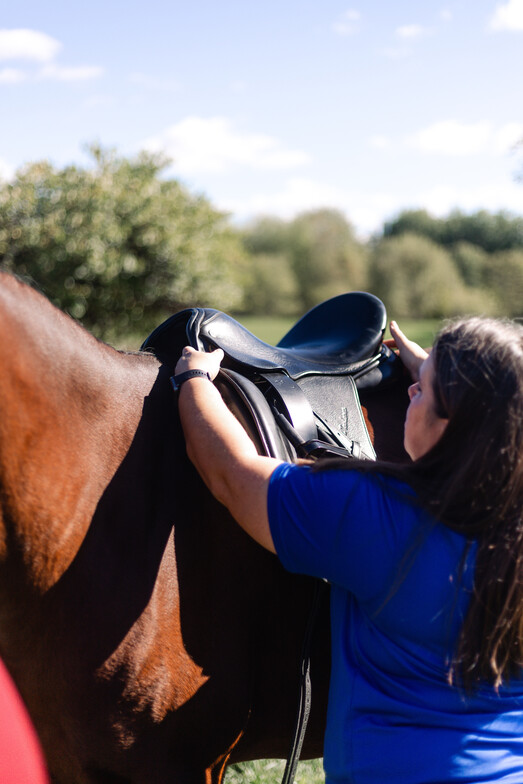
At Equinox Chiropractic, we take a whole-body approach to performance and wellness—for both horse and rider. One often overlooked but critical component of equine health is proper saddle fit. As the seasons change, so does your horse’s body, workload, and conditioning level. If your saddle fit doesn’t adapt accordingly, it can create compensatory patterns, pain, and long-term spinal dysfunction in both horse and rider.
Dr. Emma is a certified saddle ergonomist through SaddleFit 4 Life, providing comprehensive saddle fit assessments designed to support spinal health, biomechanics, and performance for the entire team.
How Seasons Affect Your Horse’s Body
Your horse’s musculoskeletal system is not static. It responds dynamically to:
-
Changes in workload
-
Fitness level and muscle development
-
Body condition fluctuations
-
Hair coat and environmental factors
Winter: Reduced Work & Muscle Loss
In colder months, many horses experience decreased workload. Even with consistent riding, intensity often drops. Reduced engagement of the topline and core can lead to subtle muscle atrophy along the thoracic spine and lumbar region. Additionally, thicker winter coats can mask changes in body condition, making saddle fit issues less obvious.
A saddle that fit perfectly during peak competition season may now sit differently—potentially bridging, rocking, or concentrating pressure along the withers or loins.
Spring: Conditioning & Rebuilding
As horses return to more consistent work, they begin rebuilding topline musculature. Increased conditioning can rapidly change back shape, particularly in young, performance, or rehabbing horses. What fit in January may be restrictive by April.
During this rebuilding phase, improper saddle fit can:
-
Inhibit correct thoracic lift
-
Restrict scapular or shoulder motion
-
Contribute to soreness along the longissimus dorsi
-
Alter stride length and impulsion
Summer: Peak Workload & Performance Stress
Show season and peak training periods increase repetitive loading of the spine. Even minor saddle asymmetries can become amplified under higher intensity work. Heat and sweat also increase friction and movement, further stressing tissue.
At this stage, subtle fit problems may manifest as:
-
Resistance to collection or bending
-
Hollowing through the back
-
Behavioral changes (pinning ears, tail swishing)
-
Unilateral muscle hypertrophy
Fall: Transition & Fluctuating Condition
As workload decreases again, horses may gain or lose weight depending on management. These transitions often create instability in saddle balance, leading to uneven rider positioning and secondary strain patterns.
The Biomechanics of Saddle Fit
A correctly fitted saddle should:
-
Distribute pressure evenly across the thoracic ribcage
-
Allow full scapular rotation
-
Maintain spinal clearance without bridging
-
Support neutral pelvic positioning for the rider
When saddle fit is compromised, it directly affects spinal motion. Horses rely on coordinated flexion and extension through the thoracolumbar junction. If pressure restricts this movement, compensations develop in the cervical spine, sacroiliac region, or even distal limbs.
Over time, this can contribute to:
-
Chronic back pain
-
Sacroiliac dysfunction
-
Reduced engagement of the hindquarters
-
Increased risk of soft tissue injury
- "Girthiness" during saddling
Rider Spinal Health: The Other Half of the Equation
Saddle fit is not just about the horse. The saddle must ergonomically support the rider’s pelvis and spine.
If the saddle places the rider in:
-
Excessive anterior or posterior pelvic tilt
-
Lateral imbalance
-
Rotational asymmetry
The rider’s spine compensates. This may lead to:
-
Lumbar facet irritation
- Disc Issues, such as compression or even herniation
-
Thoracic stiffness
-
Cervical tension and headaches
-
Hip asymmetry
More importantly, rider imbalance feeds directly back into the horse. An asymmetrical rider increases unilateral loading through the horse’s back, reinforcing dysfunctional movement patterns.
True performance optimization requires addressing both components simultaneously.
Why Seasonal Saddle Assessments Matter
Because horses’ bodies change throughout the year, saddle fit should not be considered a one-time evaluation. Seasonal reassessment ensures:
-
Continued spinal mobility
-
Proper muscular development
-
Balanced rider biomechanics
-
Prevention of chronic compensation patterns
Regular saddle fit evaluations can prevent minor restrictions from evolving into larger musculoskeletal issues that require extended rehabilitation.
Equinox Chiropractic’s Approach
At Equinox Chiropractic, Dr. Emma integrates chiropractic care with certified saddle ergonomist assessment to evaluate:
-
Static and dynamic saddle fit
-
Horse spinal motion and symmetry
-
Rider pelvic and spinal alignment
-
Interaction between horse and rider biomechanics
This comprehensive model allows us to address the root cause of dysfunction rather than simply treating symptoms.
When spinal health and saddle ergonomics work together, you create:
-
Improved performance
-
Greater comfort
-
Enhanced longevity for both horse and rider
Final Thoughts
Your horse’s body changes with the seasons—and your equipment should adapt accordingly. Proactive saddle fit assessment is one of the most effective ways to protect spinal health, improve biomechanics, and elevate performance.
If you’re transitioning into a new training phase or noticing subtle changes in your horse’s way of going, a seasonal saddle fit evaluation may be exactly what your team needs.
Because optimal performance starts with a balanced spine—for both of you.